Bhut Pret Aur Pishaach Kya Hain | भूत, प्रेत और पिशाच क्या हैं
Bhut Pret Aur Pishaach Kya Hain The words भूत (Bhoot), प्रेत (Pret), and पिशाच (Pishach) are commonly heard in Indian stories, religious discussions
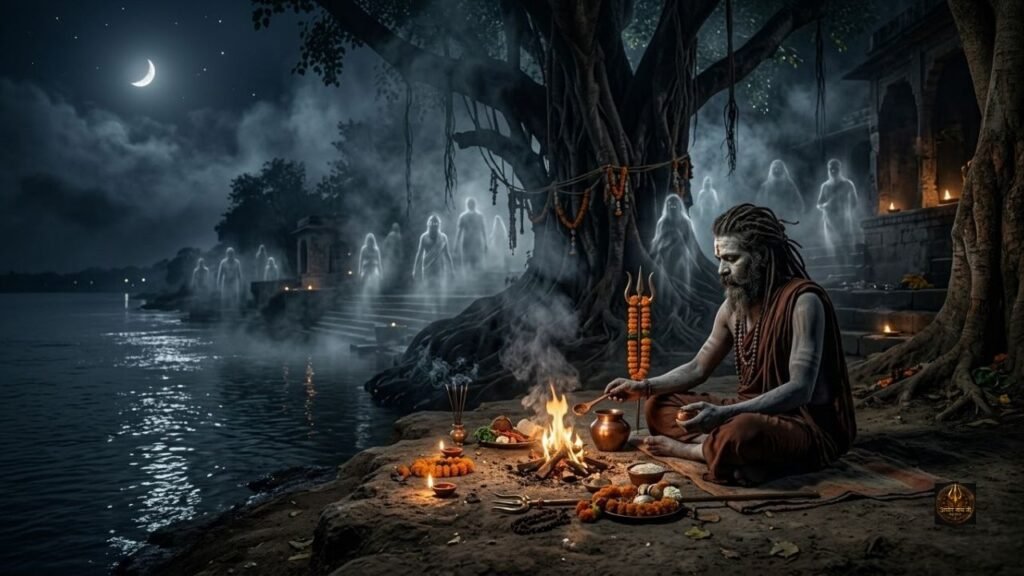
Bhut Pret Aur Pishaach Kya Hain
Bhut Pret Aur Pishaach Kya Hain The words भूत (Bhoot), प्रेत (Pret), and पिशाच (Pishach) are commonly heard in Indian stories, religious discussions, folklore, and spiritual traditions. Although people sometimes use these three words interchangeably for ghosts or supernatural beings, traditional Indian beliefs often give them different meanings.
Questions such as “भूत, प्रेत और पिशाच क्या हैं?”, “What is the difference between Bhoot and Pret?” and “Is Pishach a ghost?” are especially common among people interested in Hindu spirituality, Tantra, mythology, and Indian traditions. Bhut Pret Aur Pishaach Kya Hain
Understanding these concepts requires looking beyond horror stories and popular movies. Indian spiritual literature and folklore contain a much wider range of ideas about death, the soul, consciousness, karma, ancestors, and different forms of existence. Bhut Pret Aur Pishaach Kya Hain
At the same time, it is important to remember that descriptions of Bhoot, Pret, and Pishach belong largely to religious, cultural, mythological, and spiritual traditions. Modern science has not established the existence of these supernatural beings as objective physical entities. Bhut Pret Aur Pishaach Kya Hain
This article explains their traditional meanings, differences, cultural significance, and how they are understood in spiritual traditions.
What Is a Bhoot?
The word Bhoot comes from the Sanskrit word Bhuta, which can have several meanings depending on context.
In everyday Hindi and Indian folklore, “bhoot” generally means a ghost or spirit associated with a deceased person.
Traditional stories sometimes describe a Bhoot as a person who has died but is believed to remain connected with the earthly world. Bhut Pret Aur Pishaach Kya Hain
This association may be linked in folklore with circumstances such as:
Sudden or unexpected death
Strong attachment to people or possessions
Unfulfilled desires
Unresolved emotional matters
Unusual circumstances surrounding death
However, these explanations vary considerably between communities and traditions.
Bhoot in Indian Folklore
Bhoot stories are found throughout India. Different regions have their own names, characteristics, and stories concerning spirits.
A village may have a story about a particular tree, house, road, river, or cremation ground associated with a ghost. Such stories often become part of local folklore and are passed between generations.
These stories can be culturally meaningful, but they should not automatically be considered evidence that a supernatural entity exists at a particular location.
What Is a Pret?
Pret, or Preta, is a more specific term found in Indian religious and philosophical traditions.
The Sanskrit word Preta is generally associated with a departed being or one who has died. In certain Hindu traditions, the period after death is understood as a transitional stage before the deceased reaches another state.
This is one reason why the traditional concept of Pret should not simply be equated with the modern idea of a scary ghost.
Pret and the Transition After Death
Traditional Hindu practices include various ceremonies performed after a person’s death. These rituals are connected with ideas concerning the deceased, ancestors, family responsibilities, and the journey after death. Bhut Pret Aur Pishaach Kya Hain
Different Hindu communities follow different rituals and interpretations.
In popular understanding, a Pret may be described as a departed spirit that has not yet reached its final state. However, the exact interpretation depends on the religious text, tradition, region, and philosophical school being discussed.
Therefore, saying that every dead person becomes a Pret would be an oversimplification.
What Is a Pishach?
Pishach, or Pishacha, is different from the ordinary idea of a human ghost.
In Indian mythology and traditional literature, Pishachas are generally described as supernatural beings associated with darkness, death, wilderness, and frightening or harmful characteristics.
They appear in various forms in Indian religious and mythological traditions.
Unlike the simple idea that a Bhoot is always the spirit of a dead human being, a Pishach can be presented in traditional mythology as a distinct category of supernatural being. Bhut Pret Aur Pishaach Kya Hain
Pishach in Ancient Indian Traditions
Pishachas are mentioned in Sanskrit literature and traditional accounts alongside various other classes of supernatural beings.
Their descriptions can differ depending on the source. Some accounts portray them as frightening beings, while others place them within a broader cosmology containing different kinds of beings.
Modern popular culture often turns Pishachas into horror characters. This can make their traditional meaning difficult to understand. Bhut Pret Aur Pishaach Kya Hain
It is therefore useful to separate ancient mythology from modern horror fiction.
Bhoot, Pret and Pishach: What Is the Difference?
Although the three words are sometimes used as synonyms, their traditional meanings can be distinguished.
Term Common Meaning Traditional Context
Bhoot Ghost or spirit Often associated with a deceased person in folklore
Pret / Preta Departed or transitional being Connected with death and post-death traditions
Pishach / Pishacha Supernatural being A distinct class of frightening beings in mythology
These categories are not rigid in every Indian tradition.
Regional folklore, Sanskrit literature, religious texts, Tantra-related traditions, and popular culture may use these terms differently. Bhut Pret Aur Pishaach Kya Hain
Therefore, there is no single definition that perfectly applies to every historical or religious context.
Is Bhoot the Same as Pret?
Not exactly.
In everyday conversation, people may use Bhoot and Pret to mean the same thing. But traditional usage can distinguish between them. Bhut Pret Aur Pishaach Kya Hain
“Bhoot” is commonly used for a ghost or spirit, particularly in popular folklore.
“Pret” is connected more directly with the concept of a departed person or a transitional post-death state.
This distinction is important because many modern horror stories simplify several traditional concepts into one general category called “ghost.”
Is Pishach the Same as Bhoot?
No, not necessarily.
A Bhoot is commonly understood in folklore as a ghost or spirit, often connected with someone who has died.
A Pishach, in traditional mythology, can represent a separate class of supernatural beings.
Popular movies, television programs, and horror stories frequently mix different supernatural concepts. As a result, the original distinctions can become blurred.
Understanding the historical and cultural context helps prevent these terms from being treated as interchangeable.
Why Are These Beings Associated With Fear?
Death has always been one of humanity’s greatest mysteries.
Before modern medicine and scientific explanations became widespread, people often used spiritual and supernatural frameworks to understand unexplained events.
Darkness, isolated places, sudden deaths, strange sounds, dreams, and unusual experiences naturally became associated with supernatural stories. Bhut Pret Aur Pishaach Kya Hain
Over generations, these stories developed into folklore.
Fear of the Unknown
One major reason supernatural stories remain powerful is that they give a shape to things people do not understand.
The unknown can feel frightening. Giving it a name—Bhoot, Pret, Pishach, or another supernatural term—can make an unexplained experience easier to describe within a cultural framework. Bhut Pret Aur Pishaach Kya Hain
Cultural Storytelling
Indian folklore has a rich tradition of storytelling.
Stories about spirits and supernatural beings have historically been used for entertainment, moral teaching, religious instruction, and warnings about dangerous places or behavior. Bhut Pret Aur Pishaach Kya Hain
Not every story was intended to be taken as a literal historical event.
What Does Hindu Spirituality Say About Death?
To understand Bhoot and Pret properly, it is useful to understand the broader Hindu view of life and death.
Many Hindu philosophical traditions distinguish between the physical body and the Atman, or spiritual self.
The body is temporary, while the Atman is understood as continuing beyond physical death.
play important roles in different Hindu philosophical systems.
The idea of a ghost is therefore only one small part of a much larger discussion about death and existence.
The Importance of Karma
Karma is often simplified as “good actions receive rewards and bad actions receive punishment.”
In Indian philosophy, however, karma is a much deeper concept involving actions, consequences, intention, and the continuing cycle of existence.
It is therefore inaccurate to simply claim that a person becomes a Bhoot or Pishach because they were “bad.”
Different traditions provide different explanations of what happens after death.
Bhoot, Pret and Pishach in Tantra and Aghor Traditions
Subjects involving death, fear, cremation grounds, spirits, and supernatural beings are also discussed in certain Tantric and Aghor traditions.
Aghor is a spiritual tradition associated with confronting fear, attachment, social boundaries, and the dualities through which people commonly understand purity and impurity, life and death.
Rather than approaching these subjects merely as horror stories, Aghor-related spiritual perspectives can encourage deeper reflection on the nature of fear, mortality, consciousness, and spiritual practice.
The subject should therefore be approached respectfully and without sensationalism.
People interested in Aghor spirituality, Shiva worship, meditation, mantra, and related spiritual practices may explore teachings and information associated with Aghor Nath Ji Maharaj. Bhut Pret Aur Pishaach Kya Hain
Are Bhoot, Pret and Pishach Scientifically Proven?
There is currently no conclusive scientific evidence establishing that Bhoot, Pret, or Pishach exist as supernatural entities.
People may genuinely experience strange sounds, visions, sensations, or a feeling that someone is present. However, an experience by itself does not establish its supernatural cause. Bhut Pret Aur Pishaach Kya Hain
Possible explanations can include:
Sleep paralysis
Stress and anxiety
Grief after losing someone
Misinterpretation of sounds
Shadows and poor lighting
Memory and perception
Environmental conditions
Certain psychological or medical factors
A respectful approach does not require mocking someone’s experience. It simply means keeping a distinction between personal belief, cultural tradition, and scientific evidence.
Should You Be Afraid of Bhoot, Pret or Pishach?
Fear can become stronger when people repeatedly hear frightening stories or consume horror content.
Instead of immediately assuming that an unexplained event has a supernatural cause, it is healthier to remain calm and investigate practical possibilities first.
For people who follow a spiritual path, practices such as meditation, prayer, mantra, and disciplined spiritual practice may provide a sense of calm and inner stability.
If fear becomes persistent and begins interfering with sleep, work, relationships, or everyday life, speaking with a qualified mental-health professional can also be appropriate. Bhut Pret Aur Pishaach Kya Hain
Spirituality and practical care do not have to be opposites.
Frequently Asked Questions
What are Bhoot, Pret and Pishach?
Bhoot generally refers to a ghost or spirit in popular Indian language. Pret or Preta is associated with a departed or transitional being in certain religious traditions. Pishach or Pishacha refers to a distinct class of supernatural beings in Indian mythology. Bhut Pret Aur Pishaach Kya Hain
Is Pret the soul of a dead person?
In some traditional interpretations, Pret is associated with a departed person during a post-death or transitional state. The exact understanding varies among Hindu traditions and texts.
Is every dead person a Pret?
No. There is no single universal Hindu interpretation saying that every deceased person permanently becomes a Pret. Ideas about death, rebirth, ancestors, karma, and liberation differ among traditions.
Are Pishachas real?
Pishachas are described in Indian mythology and traditional literature. Their existence as literal supernatural beings has not been scientifically established. Bhut Pret Aur Pishaach Kya Hain
What is the main difference between Bhoot and Pishach?
A Bhoot is commonly described as a ghost or spirit, often associated with a deceased person. A Pishach is traditionally described as a different type or class of supernatural being. Bhut Pret Aur Pishaach Kya Hain
Why do people believe in ghosts?
Belief can be influenced by cultural traditions, religious ideas, personal experiences, family stories, fear of death, and unexplained events. Different societies have developed their own explanations for supernatural experiences.
Conclusion
The question “भूत, प्रेत और पिशाच क्या हैं?” cannot be answered properly by looking only at modern horror stories.
In popular Indian culture, Bhoot generally means a ghost or spirit. Pret is associated in certain traditions with the departed or a transitional state after death. Pishach is traditionally described as a separate class of supernatural being in Indian mythology.
These concepts have developed through religious traditions, Sanskrit literature, regional folklore, spiritual practices, and generations of storytelling. Bhut Pret Aur Pishaach Kya Hain
At the same time, modern science has not established these beings as objectively existing supernatural entities. Therefore, it is useful to approach the subject with both respect for traditional beliefs and awareness of scientific limitations.
Ultimately, the deeper spiritual questions behind these concepts are not only about ghosts. They concern death, consciousness, fear, attachment, karma, and the search for spiritual understanding.
For readers who wish to explore Aghor spirituality and related subjects, more information is available through Aghor Nath Ji Maharaj. Bhut Pret Aur Pishaach Kya Hain
Contact Aghor Nath Ji Maharaj
Name: Aghor Nath Ji Maharaj
Phone: 📞 Call / WhatsApp: +91-7340452967
Email: 📧 contacts@aghornathjimaharaj.info
Website: https://www.aghornathjimaharaj.info/
Note: Spiritual and cultural explanations should not be presented as scientific proof. If an unexplained experience causes significant fear or affects daily life, consider seeking appropriate professional support.