Bhoot Aur Pret Mein Antar
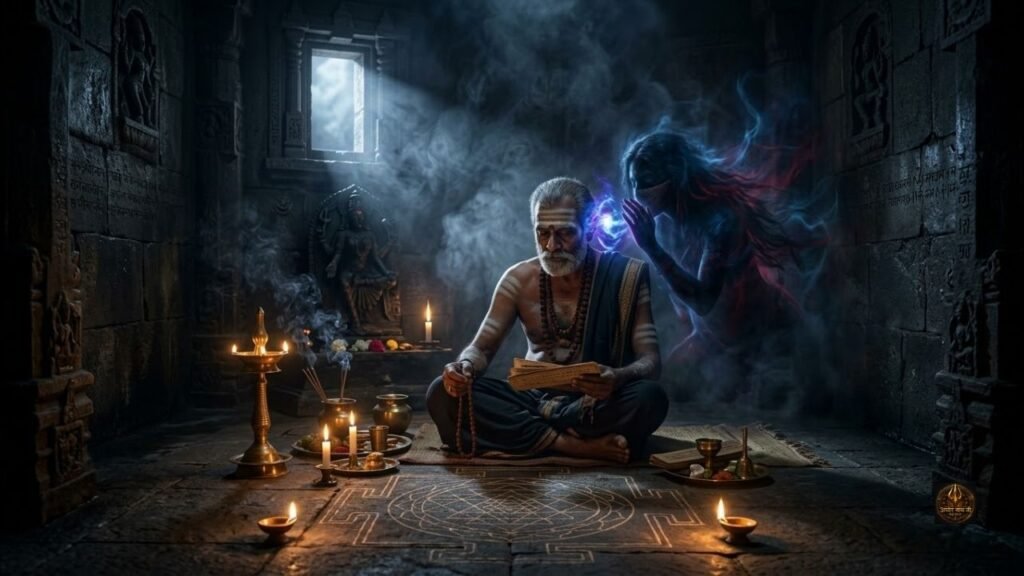
Bhoot Aur Pret Mein Antar In Indian spiritual tradition and folk belief, the terms “Bhoot” and “Pret” are often used together, almost as if they mean
Bhoot Aur Pret Mein Antar
Understanding the Real Difference Between Bhoot and Pret
Bhoot Aur Pret Mein Antar In Indian spiritual tradition and folk belief, the terms “Bhoot” and “Pret” are often used together, almost as if they mean the same thing. People say “bhoot-pret” when talking about restless spirits or negative energies. But according to Hindu scriptures, especially the Garuda Purana, and long-standing spiritual understanding, Bhoot and Pret are not identical. They represent different states of a soul after death.
This article explains Bhoot Aur Pret Mein Antar in simple, clear English so that anyone can understand the difference, why it matters, and how traditional knowledge helps people deal with such situations.
What Is a Pret?
Pret (or Preta) is the transitional state of a soul immediately after death. In Sanskrit, “Preta” comes from “pra + ita,” meaning one who has gone forth or departed. Bhoot Aur Pret Mein Antar
According to the Garuda Purana, when a person dies, the soul does not instantly become an ancestor (Pitri). For a period—commonly described as the first ten to thirteen days—the soul exists as a Preta. During this time it has a subtle body and experiences hunger, thirst, and disorientation. The funeral rites (Antyeshti, Pinda Dana, and later Sapindikarana) are performed to help the Preta move forward and join the ancestors. Bhoot Aur Pret Mein Antar
If the proper rites are not performed, or if the death was unnatural, the soul can remain stuck in the Preta state for much longer. In this condition the Pret is often restless, hungry, and unsettled. Traditional texts describe Pretas as having intense unfulfilled needs and sometimes appearing in a weakened or distorted subtle form.
In everyday language, when people say a soul has become “Pret,” they usually mean it is still in this intermediate, troubled condition and has not yet found peace or the path of further journey. Bhoot Aur Pret Mein Antar
What Is a Bhoot?
Bhoot (or Bhuta) has a broader meaning. The word itself means “that which has been” or “a being.” In spiritual and folk contexts, Bhoot refers to a spirit that remains attached to the earthly plane because of strong desires, unfinished business, sudden or violent death, or deep emotional attachment.
Unlike the temporary Preta stage that every soul passes through, a Bhoot is a soul that has become stuck for a longer period. Common reasons include:
- Sudden or untimely death (accident, suicide, murder)
- Strong attachment to people, places, or possessions
- Incomplete desires or unresolved emotions
- Lack of proper funeral rites combined with heavy attachment
Bhoots are often linked to specific locations—old houses, trees, crossroads, or places where the person died. They are believed to retain more of their human personality, thoughts, and emotions than a pure Preta in the early transitional stage.
In many traditional explanations, Bhoot is seen as a spirit still connected to the five elements (Pancha Bhuta) and therefore more tied to the material world.
Key Differences Between Bhoot and Pret
Here is a clear comparison of Bhoot Aur Pret Mein Antar:
In short: every soul becomes a Pret for a short time after death. A Bhoot is a soul that remains restless beyond that stage because of attachment or incomplete transition.
Why Do Souls Become Bhoot or Pret According to Tradition?
Hindu scriptures teach that the quality of death and the state of the mind at the final moment strongly influence what happens next. A peaceful death after a life of balanced karma, followed by correct rites, allows the soul to move forward smoothly. Bhoot Aur Pret Mein Antar
When death is sudden, violent, or filled with strong unfulfilled desires, the subtle body can remain bound to the earthly plane. Bad karma, fear, or deep emotional clinging also play a role. The Garuda Purana repeatedly stresses the importance of timely and correct funeral ceremonies so that the Preta does not linger and later become a source of disturbance.
In folk understanding across North India, people often say that a Pret is more connected with improper death and hunger, while a Bhoot carries stronger personal attachments and can interact more with the living world.
Signs People Traditionally Associate with Bhoot or Pret Influence
Traditional knowledge mentions certain repeated patterns that families sometimes notice:
- Sudden and unexplained fear or heaviness in a house
- Disturbance in sleep, especially around midnight
- Children or sensitive people becoming unusually restless
- Feeling of being watched or sudden temperature changes in specific rooms
- Repeated accidents or obstacles that seem connected to a particular place
These signs are not automatic proof. Spiritual masters always advise careful examination rather than jumping to conclusions. Many ordinary problems have ordinary causes. Only when other explanations are ruled out do experienced practitioners look deeper.
The Role of Aghori Tantra and Experienced Spiritual Masters
Aghori tradition has a long association with cremation grounds (Shamshan or Mashan). Aghori sadhakas work in environments where subtle energies and residual spirits are believed to be more active. Their path focuses on fearlessness, deep understanding of life and death, and the use of Tantra for protection and liberation rather than fear.
True Aghori practice is not about black magic or harm. It is about transforming negative energies and helping restless souls find peace while protecting the living. Experienced masters who follow the authentic Aghor path study the nature of Bhoot and Pret carefully so they can guide families correctly. Bhoot Aur Pret Mein Antar
Aghor Nath Ji Maharaj is known in this tradition for his work related to Mashani (cremation-ground) knowledge and spiritual protection through Tantra. His approach emphasizes understanding the difference between ordinary problems and genuine spiritual disturbance, and offering guidance rooted in living tradition. Bhoot Aur Pret Mein Antar
How Traditional Knowledge Helps in Liberation and Protection
The goal in Sanatan tradition is never to fight or destroy a soul. The goal is Mukti—liberation and peaceful transition.
Common traditional approaches include:
- Performing the remaining or corrective Shraddha and Pinda Dana
- Chanting protective mantras dedicated to Lord Shiva, Bhairava, Hanuman, or the Divine Mother
- Creating a positive spiritual atmosphere at home through daily worship and cleanliness
- Seeking guidance from an experienced and genuine spiritual master when the situation feels beyond ordinary remedies
Fear and blind belief rarely help. Clear understanding and correct action do.
Conclusion Bhoot Aur Pret Mein Antar
Bhoot Aur Pret Mein Antar is more than a theoretical difference. Understanding it helps people respond with clarity instead of panic. Pret is the natural intermediate state after death. Bhoot is the condition of a soul that remains bound by attachment or incomplete transition. Bhoot Aur Pret Mein Antar
Indian spiritual tradition offers both knowledge and practical methods to support restless souls and protect the living. When guidance is needed, it is wise to approach authentic sources rooted in living experience rather than fear-based stories.
For those seeking deeper understanding or spiritual guidance connected with traditional Aghor knowledge, you may explore the work of Aghor Nath Ji Maharaj. Bhoot Aur Pret Mein Antar
🌐 Website: https://www.aghornathjimaharaj.info/
📞 Call / WhatsApp: +91-7340452967
📧 Email: contacts@aghornathjimaharaj.info
May every soul find peace, and may every seeker walk with clarity and courage.