Aghori Sadhu Ka Rahasya
Aghori Sadhu Ka Rahasya Have you ever wondered what lies behind the intense, ash-covered figures sitting near cremation grounds, holding skulls,
Aghori Sadhu Ka Rahasya
Aghori Sadhu Ka Rahasya Have you ever wondered what lies behind the intense, ash-covered figures sitting near cremation grounds, holding skulls, and living beyond the boundaries most people accept? The phrase “Aghori Sadhu Ka Rahasya” captures exactly that curiosity — the deep secrets, philosophy, and spiritual power of the Aghori sadhus. These ascetics are among the most misunderstood figures in Hindu tradition. Far from being mere symbols of fear or black magic, true Aghoris follow a radical path of non-duality aimed at complete liberation.
This article explores the real meaning of Aghori life in clear, simple English. You will learn their history, core beliefs, practices, the truth behind popular myths, and why their path continues to fascinate seekers even today. Whether you are simply curious or looking for authentic spiritual guidance, this guide offers useful insights grounded in tradition.
Who Are Aghori Sadhus? Unveiling the Mysteries of the Fearless Ascetics
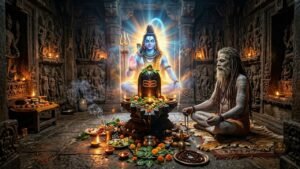
The word “Aghori” comes from Sanskrit Aghora, which means “not dreadful,” “fearless,” or “beyond the terrible.” Aghoris are Shaivite ascetics who worship Lord Shiva in his fierce form as Bhairava (or Mahakala) and often the Divine Mother as Kali or Tara of the cremation ground. Aghori Sadhu Ka Rahasya
They belong to a living Tantric tradition that traces its roots to the ancient Kapalika lineage. Unlike many other sadhus who live in temples, forests, or Himalayan caves, Aghoris deliberately choose liminal spaces — cremation grounds (shamshan). They see these places as the purest classrooms for understanding the temporary nature of the body and the eternal nature of the soul. Aghori Sadhu Ka Rahasya
Their goal is moksha — liberation from the cycle of birth and death — achieved by confronting and dissolving every form of fear, attachment, and dualistic thinking (pure vs impure, good vs bad, life vs death).
History and Origins of the Aghori Tradition
The Aghori path is connected to the broader Nath and Kapalika traditions. According to traditional accounts, the knowledge of Aghora was revealed by Lord Shiva himself through his Aghora face (one of the five faces of Sadashiva). Guru Dattatreya is revered as an early transmitter of this wisdom. Aghori Sadhu Ka Rahasya
The modern form of the Aghori parampara is often linked to Baba Keenaram (also called Kinaram), a 17th–18th century saint who is said to have lived an extraordinarily long life. His ashram in Varanasi remains an important spiritual centre for Aghoris. From there, the tradition spread, emphasizing direct experience over rigid social rules.
Aghoris are distinct from Naga sadhus, although both appear at events like the Kumbh Mela. Nagas focus more on yogic discipline and public renunciation, while Aghoris emphasise Tantric sadhana, the transcendence of dualities, and work with the energies of death and transformation. Aghori Sadhu Ka Rahasya
Core Beliefs: The Philosophy Behind the Mystery
At the heart of Aghori Sadhu Ka Rahasya lies a simple yet profound idea: everything in existence is sacred because it comes from Shiva. There is ultimately no pure or impure, no high or low. Discrimination itself is the root of suffering.
Aghoris believe the human soul is bound by eight great nooses (Ashta Pasha): lust, anger, greed, attachment, pride, jealousy, fear, and hatred/disgust. Their practices are designed to cut these bonds completely. When all dualities dissolve, the sadhak realises the state of Aghora — fearless oneness with the Absolute.
This non-dual vision explains why they do not reject what society labels “impure.” By embracing the very things that create fear and repulsion, they aim to go beyond them. Aghori Sadhu Ka Rahasya
Mysterious Practices of Aghori Sadhus
Many practices associated with Aghoris appear shocking when viewed from ordinary social norms. Understanding their purpose removes much of the mystery and fear.
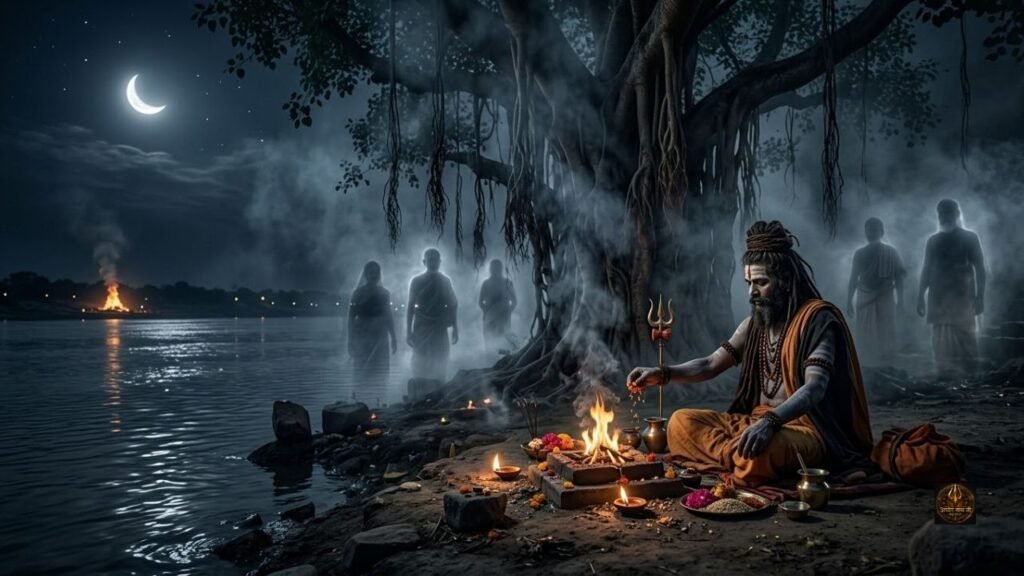
- Living in Cremation Grounds: Shamshan is seen as the place where the illusion of permanence is strongest. Meditating near burning pyres helps the sadhak confront mortality daily.
- Vibhuti (Ash) and Minimal Clothing: Covering the body with cremation ashes symbolises the end of ego and body-identification. Some Aghoris remain nearly or completely unclothed as a way to transcend shame.
- Kapala (Skull Cup): Using a human skull as a vessel for food or drink is a constant reminder that the body is temporary and that all forms return to the same source.
- Shava Sadhana and Related Rituals: Certain advanced practices involve meditation in the presence of a corpse. The purpose is not morbidity but the complete destruction of the fear of death and the awakening of higher awareness.
- Pancha Makara: In some Tantric contexts, the five “M”s (madya, mamsa, matsya, mudra, maithuna) are used under strict guidance as tools to transcend ordinary dualities. In authentic lineages these are highly regulated and not casual indulgences.
- Mantra, Homa, and Protection Work: Genuine Aghoris also perform powerful protective and purifying rituals for people suffering from spiritual disturbances, ancestral issues, or heavy negative energies.
These practices are never meant for public display or personal power. They require long preparation, a living Guru, and pure intention. Without proper guidance they can be dangerous. Aghori Sadhu Ka Rahasya
Common Myths vs Reality
Myth 1: All Aghoris practice black magic or harm people.
Reality: Authentic Aghor tradition aims at self-realisation and the welfare of others. Misuse of Tantric knowledge exists in every path, but true Aghoris work for balance and liberation.
Myth 2: They deliberately kill for rituals.
Reality: Traditional accounts make clear that they work with already deceased bodies found in cremation grounds. Taking life is against the deeper principles of the path.
Myth 3: Aghori life is only about extreme rituals.
Reality: The outer practices support an inner state of complete non-discrimination, compassion, and fearlessness. Many mature Aghoris live simply and help people quietly.
The Importance of the Guru in Aghori Path
No serious Aghori sadhana is possible without the guidance of a realised Guru. The path involves working with intense energies. A true master protects the disciple, corrects mistakes, and transmits the living current of the tradition. Blind experimentation or learning from books and videos is strongly discouraged.
Seeking Authentic Guidance Today
In today’s world, many people face unexplained fear, spiritual disturbances, family problems linked to ancestral issues, or a deep inner calling toward stronger spiritual protection. Authentic Aghori knowledge, when applied with responsibility, can offer clarity and relief. Aghori Sadhu Ka Rahasya
For those drawn to the living tradition of Mashani (cremation-ground) Tantra and genuine spiritual protection, guidance is available through experienced practitioners rooted in the Aghor lineage.
Aghor Nath Ji Maharaj
Website: https://www.aghornathjimaharaj.info/
Call / WhatsApp: +91-7340452967
Email: contacts@aghornathjimaharaj.info
He is known among seekers for work related to spiritual protection, understanding subtle energies, and traditional Aghor-based remedies offered with practical wisdom. Aghori Sadhu Ka Rahasya
Conclusion: What the Rahasya Truly Means
Aghori Sadhu Ka Rahasya is not ultimately about skulls, ashes, or cremation grounds. The deepest secret is the state of consciousness in which nothing remains dreadful. When fear, disgust, and dualistic judgment dissolve, what remains is pure awareness — the same awareness that is Shiva.
This path is not for everyone. It is extreme, demanding, and requires total sincerity. Yet the underlying message is universal: the things we fear most often hold the key to our freedom. By facing them with courage and under proper guidance, a seeker can move beyond ordinary limitations.
Whether you approach this topic out of curiosity, academic interest, or a personal spiritual need, approach it with respect. The Aghori tradition continues to remind the world that true spirituality is not always comfortable — but it can be profoundly transformative. Aghori Sadhu Ka Rahasya
May the blessings of Lord Bhairava and the protective grace of the Divine Mother bring clarity, fearlessness, and peace to every sincere seeker.