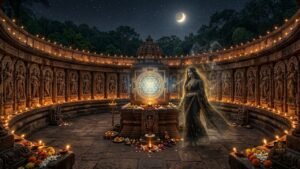
Exploring India’s Spiritual Heritage
Spiritual Knowledge Spiritual knowledge is a journey of understanding the self, consciousness, devotion, discipline, and the deeper traditions that have developed across India over thousands of years.
Through this section, we explore subjects including Mantra, Meditation, Mahadev and Shiva Sadhana, Shakti Upasana, Rudraksha, Aghor Tradition, Indian spiritual traditions, Sadhana, self-reflection, and spiritual lifestyle.
The purpose is to present these subjects in a thoughtful, educational, and respectful manner while recognizing that different traditions and lineages may have their own interpretations and practices. Spiritual Knowledge
Mantra & Meditation
Mantra and meditation have an important place in many Indian spiritual traditions.
Mantra practice traditionally involves the focused repetition or contemplation of sacred sounds or phrases, while meditation encourages awareness, concentration, stillness, and observation of the mind. Spiritual Knowledge
Together, these practices may support a disciplined approach to self-reflection and spiritual development.
The deeper purpose of meditation is not simply to achieve temporary relaxation, but to develop greater awareness of thoughts, emotions, habits, and the nature of one’s inner experience. Spiritual Knowledge
Mahadev / Shiva Sadhana
Lord Shiva, or Mahadev, holds a central position in Shaiva traditions and is revered as a profound symbol of consciousness, transformation, meditation, and detachment. Spiritual Knowledge
Shiva Sadhana may involve prayer, meditation, mantra, devotion, contemplation, and traditional forms of worship depending on the practitioner’s lineage.
The spiritual symbolism of Shiva encourages seekers to cultivate stillness, awareness, humility, discipline, and freedom from excessive attachment. Spiritual Knowledge
Shakti Upasana
Shakti Upasana is the worship and contemplation of the Divine Feminine.
Forms of Shakti such as Maa Durga, Maa Kali, Maa Mahakali, Maa Kamakhya, and other manifestations are revered across different traditions of Shakta spirituality. Spiritual Knowledge
Shakti represents divine energy, creativity, transformation, strength, and the dynamic aspect of consciousness.
Through Shakti Upasana, devotees may develop devotion, courage, spiritual discipline, and a deeper relationship with the Divine Feminine.
Rudraksha
Rudraksha has a significant place in Shaiva and devotional traditions and is traditionally associated with Lord Shiva.
Different types of Rudraksha are described in traditional texts and spiritual practices, with various beliefs regarding their symbolism and significance. Spiritual Knowledge
Our content explores the traditional and cultural understanding of Rudraksha, including its connection with Shiva worship, meditation, devotion, and spiritual discipline.
Rudraksha should be approached with respect for tradition rather than as a guaranteed solution to personal, health, financial, or other problems.
Aghor Tradition
The Aghor tradition is an important subject within the broader spiritual heritage of Shaivism.
Aghor is traditionally associated with fearlessness, acceptance, detachment, self-awareness, and freedom from rigid distinctions.
The deeper philosophy of Aghor is often misunderstood because of sensational stories and popular representations. Our approach focuses on its spiritual, philosophical, and cultural dimensions.
The emphasis is on understanding the mind, overcoming fear and attachment, developing awareness, and pursuing inner transformation.
Indian Spiritual Traditions
India is home to a vast and diverse range of spiritual traditions, philosophies, schools, and practices.
These include Shaiva, Shakta, Vaishnava, Tantric, Yogic, Vedantic, Bhakti, and numerous regional and devotional traditions.
Each tradition has its own history, philosophy, practices, teachers, and lineages.
Our aim is to explore this diversity with respect and encourage a deeper understanding of India’s spiritual and cultural heritage.
Sadhana & Self-Reflection
Sadhana is traditionally understood as disciplined spiritual practice undertaken for personal and spiritual development.
Self-reflection is an important part of this journey. A seeker is encouraged to observe thoughts, emotions, desires, fears, habits, and actions with greater awareness.
Spiritual growth is not measured only by external practices. It can also be reflected through greater patience, discipline, compassion, humility, clarity, and responsibility.
Spiritual Lifestyle & Discipline
Spirituality can become meaningful when its principles are incorporated into everyday life.
A balanced spiritual lifestyle may encourage:
- Regular meditation and prayer
- Self-discipline and mindful living
- Respect for others
- Compassion and kindness
- Responsible conduct
- Awareness of thoughts and actions
- Simplicity and contentment
- Continuous learning and self-reflection
The goal is not to separate spirituality from everyday life, but to bring greater awareness and balance into one’s daily actions.
Our Approach to Spiritual Knowledge
The information presented here is intended to encourage learning, reflection, and respectful exploration of Indian spiritual traditions.
Different Gurus, scriptures, schools, and lineages may interpret spiritual practices differently. Visitors are encouraged to approach spiritual knowledge with an open mind, discernment, humility, and respect for authentic traditions.
Spiritual knowledge becomes meaningful when understanding is accompanied by discipline, compassion, and responsible action.