Bhagwan Shiv Aur Unke Vibhinn Swaroop: Exploring the Divine Forms of Lord Shiva
Bhagwan Shiv Aur Unke Vibhinn Swaroop Bhagwan Shiv holds a unique place in Hindu spirituality as the supreme consciousness who creates, pre
Bhagwan Shiv Aur Unke Vibhinn Swaroop
Bhagwan Shiv Aur Unke Vibhinn Swaroop | भगवान शिव और उनके विभिन्न स्वरूप
Bhagwan Shiv Aur Unke Vibhinn Swaroop Bhagwan Shiv holds a unique place in Hindu spirituality as the supreme consciousness who creates, preserves, destroys, and ultimately liberates. Known by countless names such as Mahadev, Bholenath, Shankar, and Neelkanth, he embodies both fierce power and gentle compassion. The topic of Bhagwan Shiv aur unke vibhinn swaroop (Lord Shiva and his various forms) reveals how the formless absolute takes tangible shapes so that devotees can relate to him according to their needs and stages of life. Understanding the forms of Lord Shiva helps seekers move beyond a single image and connect with his multi-dimensional nature.
This article explores the major manifestations of Bhagwan Shiv ke vibhinn swaroop in clear, simple language. It draws from traditional understanding found in the Shiva Purana, Agamas, and temple traditions while remaining practical and accessible. Bhagwan Shiv Aur Unke Vibhinn Swaroop
Who is Bhagwan Shiv?
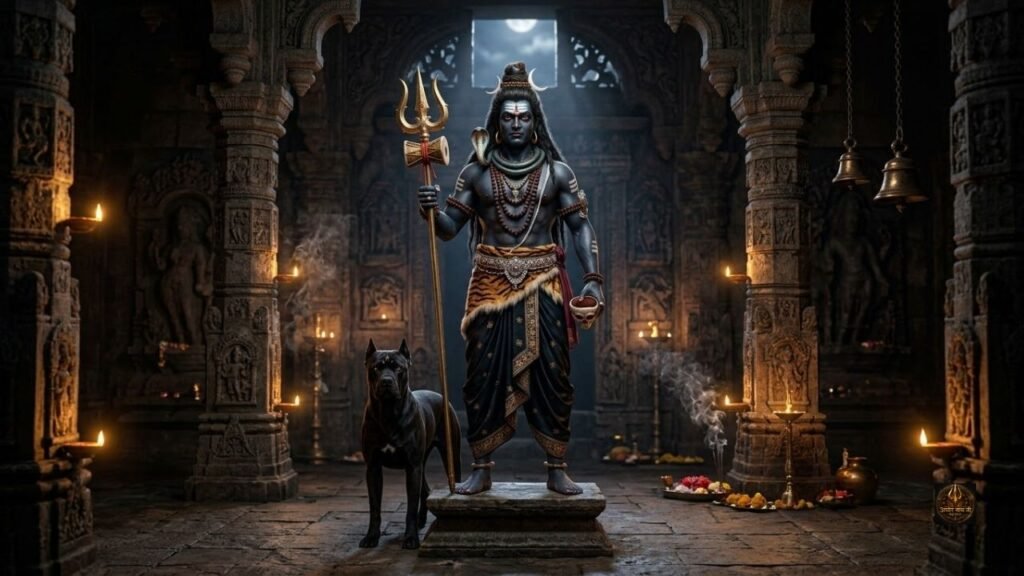
Bhagwan Shiv is one of the Trimurti, yet many traditions regard him as the ultimate reality beyond creation and dissolution. He is often depicted with matted locks holding the Ganga, a crescent moon on his forehead, a third eye of wisdom, a blue throat from drinking the Halahala poison, snakes around his neck, and a tiger skin. These symbols are not decoration; each carries deep meaning. The ashes on his body remind us of the impermanence of the physical world. The trident represents the three gunas, and the damaru produces the primordial sound of creation. Bhagwan Shiv Aur Unke Vibhinn Swaroop
What makes Bhagwan Shiv special is his accessibility. He is called Ashutosh, the one who is easily pleased. Whether a devotee approaches him through simple water offering on a Shiva Linga or through intense meditation, he responds. His various forms allow different paths—gentle devotion, rigorous discipline, fierce transformation, or silent wisdom—to reach the same truth.
The Significance of Bhagwan Shiv ke Vibhinn Swaroop
The concept of Bhagwan Shiv ke vibhinn swaroop shows that the divine is not limited to one appearance. Just as water can be ice, liquid, or vapor while remaining water, Shiva manifests differently according to the purpose. Scriptures describe 64 classical forms (Maheshwara Murtis) and many more avatars or expressions. These forms of Lord Shiva help devotees focus their mind, remove specific obstacles, and progress spiritually.
In daily life, meditating on a particular form brings corresponding qualities. Contemplating the peaceful householder form brings balance in family life. Focusing on the fierce form dissolves fear and ego. The variety prevents spiritual stagnation and keeps devotion alive. Bhagwan Shiv Aur Unke Vibhinn Swaroop
Major Forms of Lord Shiva
Nataraja – The Cosmic Dancer
One of the most celebrated forms of Lord Shiva is Nataraja, the Lord of Dance. In this form, Shiva performs the Tandava, the cosmic dance that represents the continuous cycle of creation, preservation, destruction, illusion, and grace. His raised foot offers refuge, while the other crushes the demon of ignorance (Apasmara). The ring of fire around him shows the cycle of time. Bhagwan Shiv Aur Unke Vibhinn Swaroop
Nataraja teaches that life is rhythmic movement. Destruction is never final; it clears space for renewal. Devotees facing major life transitions often find strength by contemplating this dynamic form of Bhagwan Shiv.
Ardhanarishvara – The Perfect Union
Ardhanarishvara is the form in which the right half is Shiva and the left half is Parvati (Shakti). This powerful image of Lord Shiva various forms demonstrates that masculine and feminine energies are inseparable and complementary. Creation itself arises from their perfect balance.
In a practical sense, this form reminds us that true strength includes compassion, and true sensitivity includes firmness. Many couples and individuals seeking inner harmony meditate on Ardhanarishvara to cultivate balance within themselves and in relationships. Bhagwan Shiv Aur Unke Vibhinn Swaroop
Bhairava – The Fierce Protector
Bhairava (or Kalabhairava) is the intense, protective form of Shiva associated with time, justice, and the removal of fear. Often depicted with a dog as his vehicle, fierce eyes, and a garland of skulls, Bhairava guards sacred places and destroys arrogance and negativity. Every major Shakti Peetha has a Bhairava as its guardian.
This form of Bhagwan Shiv is especially relevant for those dealing with deep-seated fears, black magic concerns, or the need for sharp inner transformation. In the Aghor tradition, which traces its roots to the Aghora face of Shiva, Bhairava is central. Devotees seeking authentic guidance on such paths often turn to experienced guides.
Dakshinamurti – The Silent Teacher
Facing south under a banyan tree, Dakshinamurti is Shiva as the supreme guru. He imparts the highest knowledge not through long lectures but through silence and a simple gesture of the hand (chin mudra). The four disciples around him represent the mind that receives this silent wisdom. Bhagwan Shiv Aur Unke Vibhinn Swaroop
Students, seekers of self-knowledge, and anyone feeling confused about life’s deeper purpose find clarity through this form. Dakshinamurti shows that true teaching awakens what is already within the student. Bhagwan Shiv Aur Unke Vibhinn Swaroop
Panchamukha Shiva – The Five Faces
Panchamukha Shiva has five faces, each linked to a direction, element, and cosmic function:
- Sadyojata (west, earth) – creation
- Vamadeva (north, water) – preservation
- Aghora (south, fire) – destruction and transformation
- Tatpurusha (east, air) – concealment
- Ishana (upward, space) – grace and liberation
These five faces of Bhagwan Shiv ke vibhinn swaroop correspond to the five syllables of the powerful mantra “Om Namah Shivaya.” Contemplating Panchamukha helps a devotee understand the complete cycle of existence and the five activities of the divine. Bhagwan Shiv Aur Unke Vibhinn Swaroop
Ashtamurti – The Eight Cosmic Forms
The Ashtamurti concept describes eight fundamental forms of Shiva that pervade the universe: Sharva (earth), Bhava (water), Rudra (fire), Ugra (air), Bhima (space), Pashupati (the individual soul), Ishana (sun), and Mahadeva (moon). In this understanding, everything in nature is an expression of Bhagwan Shiv.
This vision expands devotion beyond temples into everyday life. Seeing the divine in the elements, the sun, the moon, and within one’s own self deepens the experience of oneness.
Other Important Forms
Other significant expressions include Neelkanth (the blue-throated one who swallowed poison for the world’s welfare), Pashupati (lord of all beings and the one who frees the soul from bondage), Virabhadra (the fierce warrior born from Shiva’s anger to restore justice), and the simple Shiva Linga, which represents the formless absolute beyond all attributes.
Each of these forms of Lord Shiva carries a specific teaching and blessing.
Lessons from the Various Forms of Lord Shiva
Studying Bhagwan Shiv aur unke vibhinn swaroop offers practical wisdom:
- Life constantly changes; accept the dance (Nataraja).
- Balance opposing qualities within yourself (Ardhanarishvara).
- Face fear directly rather than avoid it (Bhairava).
- True knowledge often comes in silence (Dakshinamurti).
- The entire universe is sacred (Ashtamurti and Panchamukha).
These teachings remain relevant whether one lives as a householder or a renunciate.
Connecting with Bhagwan Shiv in Daily Life
Simple practices include offering water or bilva leaves to a Shiva Linga, chanting “Om Namah Shivaya,” observing Mondays or the month of Sawan with devotion, and reading or listening to Shiva stories. Meditation on a chosen form brings its qualities into one’s character. Bhagwan Shiv Aur Unke Vibhinn Swaroop
For those drawn to the deeper, transformative aspects of Shiva—particularly the Bhairava and Aghor dimensions—authentic guidance is valuable. Aghor Nath Ji Maharaj specializes in traditional practices connected to these paths.
Contact details:
Name: Aghor Nath Ji Maharaj
Phone / WhatsApp: +91-7340452967
Email: contacts@aghornathjimaharaj.info
Website: https://www.aghornathjimaharaj.info/
Conclusion
Bhagwan Shiv ke vibhinn swaroop reveal that the divine is both transcendent and intimately available. Whether you connect with the cosmic dancer, the balanced Ardhanarishvara, the protective Bhairava, the silent teacher, or the five-faced and eight-formed expressions, each form of Lord Shiva guides the seeker toward the same destination: recognition of the eternal Shiva within. Exploring these manifestations expands the heart, clarifies the mind, and deepens devotion. May the blessings of Mahadev illuminate the path of every sincere seeker. Har Har Mahadev. Bhagwan Shiv Aur Unke Vibhinn Swaroop